Is SC-100 Worth It? An Honest Look at Microsoft's Cybersecurity Architect Cert
Is SC-100 worth it? An honest, decision-focused look at Microsoft's expert-level Cybersecurity Architect certification and who should actually pursue it.
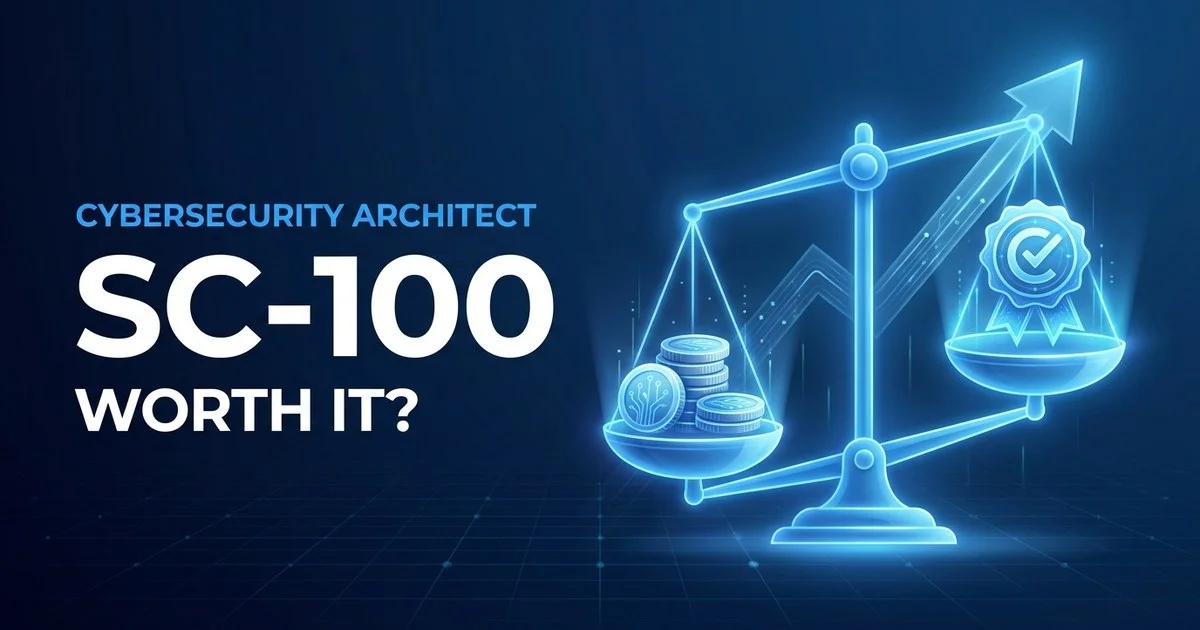
Table of Contents
"Is SC-100 worth it?" is one of the most misunderstood questions in the Microsoft security certification world, mostly because people ask it about the wrong stage of their career. SC-100 earns you the Microsoft Certified: Cybersecurity Architect Expert title, and the word Expert is not marketing fluff. This is a strategy-and-design exam that assumes you already live inside Azure security every day. Treated as a first security cert, it is a frustrating waste of money. Treated as a capstone, it can be one of the highest-leverage credentials you hold.
The honest answer depends almost entirely on who you are. A security architect, a Microsoft consultant, or an engineer already operating in an Azure security role will get real value. Someone brand new to cloud security should not touch it yet. Before you commit study time or exam fees, it helps to understand exactly what the exam covers and what it demands of you. Our SC-100 exam guide breaks down the full objective domain, but this article focuses on the decision itself: is it worth your time and money right now?
The Prerequisite Reality Nobody Mentions First
Before anything else, understand the gate. You cannot earn the SC-100 certification from a single exam. Microsoft requires you to also hold one of four associate-level certifications before the Cybersecurity Architect title is awarded:
- SC-200 — Security Operations Analyst (Defender, Sentinel, threat response)
- SC-300 — Identity and Access Administrator (Entra ID, conditional access)
- AZ-500 — Azure Security Engineer (platform security controls)
- MS-102 — Microsoft 365 Administrator
You can sit and pass the SC-100 exam without the prerequisite, but the certification badge is only issued once one of those associate certs is on your transcript. In practice this means SC-100 is a second or third Microsoft security cert, never a first one. If you are staring at a blank transcript, the real question is not "is SC-100 worth it" but "which associate cert should I earn first." Full prerequisite details are on the SC-100 certification page.
What SC-100 Actually Tests (Strategy, Not Clicks)
This is where most candidates are surprised. SC-100 is not a hands-on portal exam. You will not be asked which blade toggles a firewall rule. Instead, it tests whether you can design a coherent security posture across an enterprise. The objective domain centres on:
- Designing a Zero Trust strategy and translating it into architecture
- Evaluating governance, risk, and compliance (GRC) requirements and mapping them to controls
- Designing security for infrastructure, applications, data, and identity
- Recommending best practices using the Microsoft Cloud Security Benchmark and Cloud Adoption Framework
The questions are scenario-heavy: a company describes its estate, its regulatory constraints, and its risks, and you choose the design that best satisfies competing priorities. There is often no single "correct" product answer — you are graded on architectural judgement. That is why hands-on operators sometimes struggle: knowing how to configure Defender is different from knowing when and why to recommend it over an alternative.
Who SC-100 Is Genuinely Worth It For
SC-100 pays off when the title matches the work you already do or are moving toward. It is worth it for:
- Security architects and aspiring architects — the cert directly validates the design thinking your role demands.
- Microsoft partners and consultants — expert-level certs feed partner competency requirements and win client trust in pre-sales conversations.
- Engineers already in an Azure security role — if you hold SC-200, SC-300, or AZ-500 and want to move from implementer to designer, SC-100 is the logical next rung.
- Senior professionals seeking a résumé signal — "Cybersecurity Architect Expert" is a recognisable, hard-to-fake credential that filters you into higher-tier roles.
The common thread: these people already have the associate-level foundation, real Azure exposure, and a career trajectory that uses architecture skills. For them the cert confirms competence rather than teaching it from scratch.
Who Should Skip It (For Now)
Just as important is knowing when SC-100 is the wrong choice. Skip it, at least for now, if you are:
- New to security or cloud entirely — start with a fundamentals cert (SC-900) and an associate cert like SC-200 or SC-300 first. Jumping to SC-100 means memorising strategy you have never implemented.
- A pure hands-on operator with no design ambitions — if your job is running SOC alerts and you have no interest in architecture, the associate certs deliver more day-to-day value.
- Chasing your first security job — hiring managers for entry roles want demonstrable hands-on skill, not an expert design badge you cannot yet back up in an interview.
- Certifying just to collect badges — an expert cert you cannot defend in conversation can actually hurt credibility.
If any of these fit, your money and study hours are better spent building the foundation. You can validate that foundation cheaply with the free practice tests hub before deciding where to invest next.
Cost, Effort, and Opportunity Cost
SC-100 carries a standard Microsoft role-based exam fee, but prices vary by region and change over time, so always confirm the current amount on the official SC-100 page and Microsoft's site rather than trusting a number you read in a blog. The bigger cost is rarely the fee — it is time and prerequisites.
| Cost component | Reality |
|---|---|
| Exam fee | Standard role-based rate; check official page for your region |
| Prerequisite cert | You must also pass and hold SC-200, SC-300, AZ-500, or MS-102 |
| Study time | Significant if your architecture experience is thin |
| Renewal | Free annual online renewal assessment to stay current |
Weigh the opportunity cost honestly. The weeks you spend on SC-100 could instead go toward a second associate cert that broadens your hands-on range, or toward practical project experience. For someone already at the architect level, SC-100 is efficient. For someone still building depth, that same time buys more elsewhere.
The Honest Verdict
So, is SC-100 worth it? Yes — but only at the right point in your journey. If you already hold an associate security cert, work with Azure security daily, and are moving toward or already in an architect or consulting role, SC-100 is one of the strongest credentials Microsoft offers to validate design-level thinking. It signals seniority in a way associate certs cannot.
If you are new, chasing a first security job, or purely hands-on with no architecture ambitions, SC-100 is premature. Earn a fundamentals cert, then an associate cert, get real implementation reps, and revisit SC-100 once the title actually describes your work. The certification is a capstone, not a starting block. Match it to your stage and it delivers; force it early and it mostly delivers frustration and a badge you cannot defend. Decide based on where you are today — not on the prestige of the word Expert.
Frequently Asked Questions
Do I need to pass a prerequisite exam before taking SC-100?
You can sit the SC-100 exam without a prerequisite, but Microsoft only awards the Cybersecurity Architect Expert certification once you also hold one of four associate certs: SC-200, SC-300, AZ-500, or MS-102.
Is SC-100 a good first security certification?
No. It is an expert-level design exam that assumes real Azure security experience. Start with a fundamentals cert like SC-900 and an associate cert such as SC-200 or SC-300 first.
Does SC-100 test hands-on portal configuration?
Not primarily. SC-100 is strategy-focused. It tests your ability to design security posture, apply Zero Trust, and evaluate governance, risk, and compliance rather than click through configuration steps.
How much does the SC-100 exam cost?
It uses Microsoft's standard role-based exam fee, which varies by region and changes over time. Always check the official Microsoft SC-100 page for current pricing rather than relying on figures in articles.
Who benefits most from SC-100?
Security architects, Microsoft consultants and partners, and engineers already in an Azure security role who want to move from implementer to designer benefit most, since the cert validates skills they already use.
Practice with ExamCert
500–1,000+ certification practice questions covering AWS, Azure, GCP, AI, security, and more — with detailed explanations.
Browse All Exams
Master the 2026 IT Stack
Practice exam questions with detailed explanations across AWS, Azure, GCP, security, and AI certifications.