
PMI-PBA Exam Objectives (2026): Every Domain, Weight and What Gets Asked
The PMI-PBA blueprint has 5 domains and they are nowhere near equal. Here is the exact weighting, roughly how many questions each is worth, and the kind of question each domain actually produces.
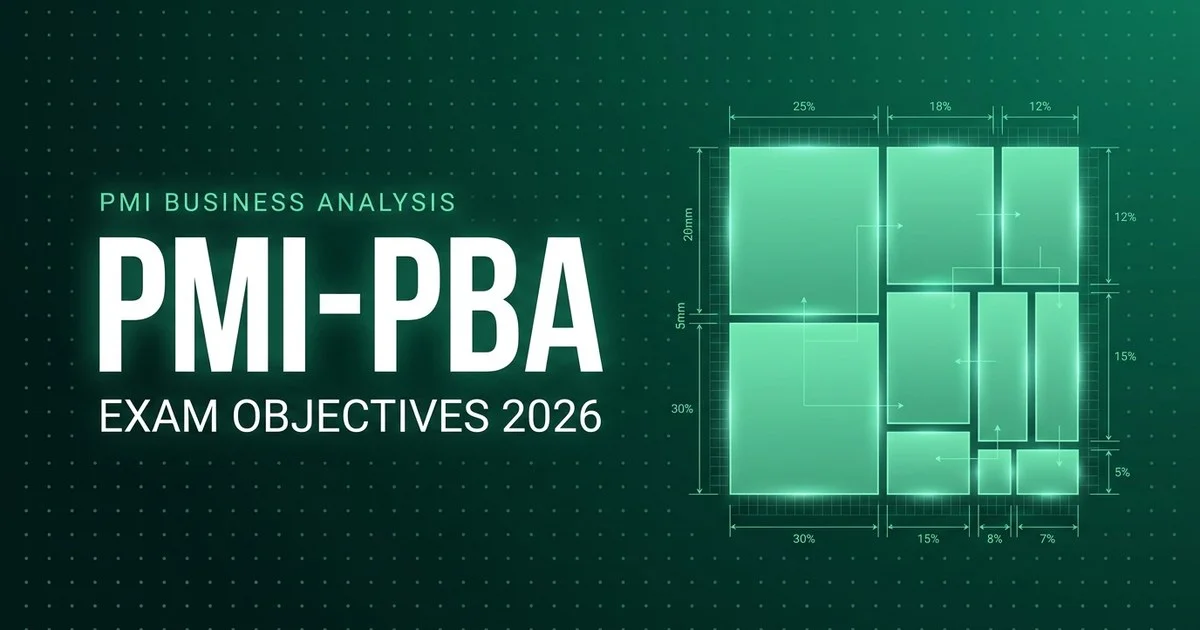
The PMI-PBA blueprint at a glance
Every block below is sized to its share of the exam. The point of drawing it this way is simple: most candidates spread their study time evenly across domains, and the blueprint is not even. Analysis alone is 35% of your score.
Block size is proportional to domain weight. PMI publishes these as average weights, so individual exam forms vary slightly.
Domain by domain: what actually gets asked
Weights tell you how much a domain matters. They do not tell you what the questions feel like. This is the part most objective lists leave out.
Analysis
35%~70 questionsOver a third of the exam. Elicitation, modelling, specifying and validating requirements, and resolving conflicts between stakeholders who both think they are right.
Planning
22%~44 questionsChoosing the BA approach before you start: elicitation and analysis methods, traceability strategy, and planning stakeholder engagement.
Needs Assessment
18%~36 questionsThe front end — identifying the real problem rather than the requested solution, assessing current state, and building a defensible business case.
Traceability & Monitoring
15%~30 questionsKeeping requirements honest through change: tracing to design and test, impact analysis, baselines and approvals.
Evaluation
10%~20 questionsThe often-skipped end: did the delivered solution meet the requirement, did it realise the value promised, and what do you recommend now.
The study order the weights imply
Sequencing by weight is not the only valid approach — but it is the one that protects your score if you run out of time.
Do first · 57% of the exam
- Analysis (35%)
- Planning (22%)
Then · 33%
- Needs Assessment (18%)
- Traceability & Monitoring (15%)
Last · 10%
- Evaluation (10%)
One caveat worth stating: a low-weight domain you know nothing about is still a guaranteed loss of those marks. Aim for competence everywhere and depth in the heavy domains, rather than ignoring the tail entirely.
Practise PMI-PBA the way it is actually asked
Exam-style questions weighted to the real blueprint, with an explanation on every answer.
Estimated question counts
Based on a 200-question form. Use it to set a target for how many practice questions per domain you should be getting right.
| Domain | Weight | Approx. questions | Miss all of it and you lose |
|---|---|---|---|
| Analysis | 35% | ~70 | 35 points |
| Planning | 22% | ~44 | 22 points |
| Needs Assessment | 18% | ~36 | 18 points |
| Traceability & Monitoring | 15% | ~30 | 15 points |
| Evaluation | 10% | ~20 | 10 points |
FAQ
How many domains are on the PMI-PBA exam?
5. The heaviest is Analysis at 35% and the lightest is Evaluation at 10%. Weights are averages, so the exact split shifts a little between exam forms.
How many questions come from each PMI-PBA domain?
On a 200-question form, multiply the weight by the total: Analysis at 35% is roughly 70 questions. Treat these as planning estimates, not guarantees.
Which PMI-PBA domain should I study first?
Start with Analysis and Planning. Together they are about 57% of the exam, so early progress there moves your score more than anything else.
Do the PMI-PBA objectives change?
Yes. PMI revises the blueprint periodically and weights move with it. Always download the current exam outline from PMI before you build a study plan, and check the version date against any course you buy.
ExamCert Team — we build exam-style practice banks for 90+ certifications. Domain weights here come from the current PMI exam outline; question-count figures are estimates derived from those weights.
Related: PMI-PBA exam guide · Is PMI-PBA worth it in 2026?