Cybersecurity Certification Roadmap 2026: From Beginner to CISO
The no-BS guide to which security certifications to get, in what order, and what each level actually pays in 2026.
Forget the 47-Certification Charts
Every cybersecurity roadmap I've seen looks like a subway map designed by someone who's never ridden a train. Forty-seven certifications, arrows going everywhere, and zero guidance on which ones actually matter for getting hired.
Here's what nobody tells you: you don't need 47 certifications. You need 3-5, chosen strategically, earned in the right order, paired with real experience. That's it. I've hired security engineers with two certs and passed on candidates with ten — because the right certs in the right order tell me you know what you're doing.
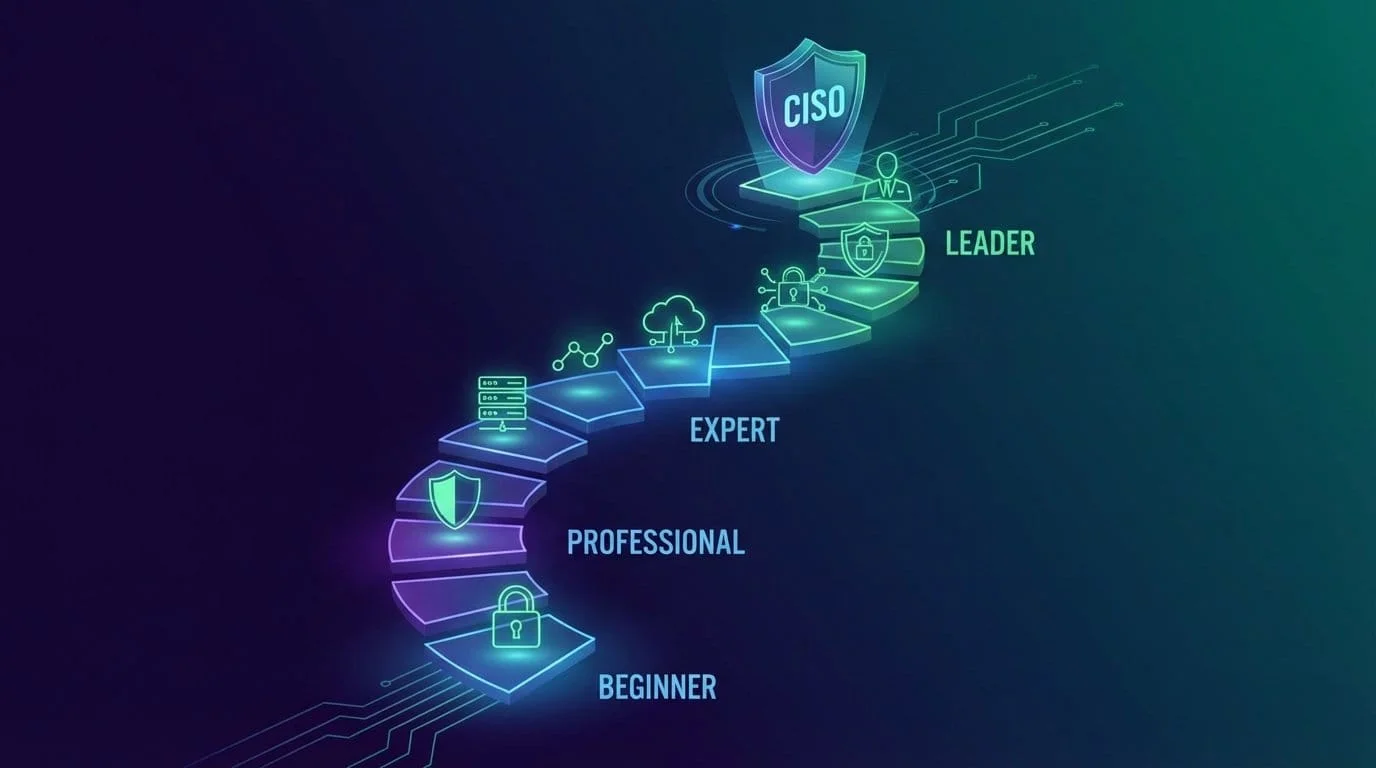
This roadmap cuts through the noise. Five levels. Clear progression. Real salary data. Let's go.
Level 1: The Entry Point (0-2 Years Experience)
You're new to security. Maybe you're in IT already, maybe you're career-switching from something completely different. Either way, you need a credential that proves you understand security fundamentals and gets you past the HR filter.
The Two Best Starting Certs
Option A: Security+ (SY0-701)
- Cost: $404
- Study time: 6-10 weeks
- Salary unlock: $55,000-$75,000 (Security Analyst, SOC Analyst)
- Why: Broadest recognition, DoD 8570 approved, vendor-neutral
Option B: ISC2 Certified in Cybersecurity (CC)
- Cost: Free (ISC2 covers exam and training)
- Study time: 4-6 weeks
- Salary unlock: $50,000-$65,000
- Why: Free, recognized brand (ISC2), pathway to CISSP
My recommendation? If money is tight, start with CC — it's literally free. If you can invest $400, Security+ has wider recognition and more job postings require it specifically. But honestly, either one gets your foot in the door.
🎯 Level 1 Goal
Land your first security role: SOC Analyst, Junior Security Analyst, or Security Operations Technician. Target salary: $55K-$75K. Time to achieve: 3-6 months of study + job search.
What to Do Alongside Your First Cert
A cert alone won't get you hired. You also need:
- Home lab: Set up a virtual network with pfSense, Splunk, and some vulnerable VMs
- TryHackMe or HackTheBox: Free hands-on security challenges
- Write about it: A blog post about your home lab setup shows initiative
Level 2: Building Specialization (2-4 Years Experience)
You've been in security for a couple of years. You know what a SIEM is (and you've argued about which one is best). Now it's time to specialize. This is where the roadmap branches.
Blue Team Track (Defensive Security)
If you like detecting threats, incident response, and protecting systems:
CEH v13 (Certified Ethical Hacker)
- Cost: $950-$1,199
- Study time: 8-12 weeks
- Salary unlock: $75,000-$100,000
- Why: Widely recognized, covers attack techniques from a defender's perspective
CySA+ (Cybersecurity Analyst)
- Cost: $404
- Study time: 8-10 weeks
- Salary unlock: $70,000-$95,000
- Why: Cheaper alternative to CEH, more detection/analysis focused
Red Team Track (Offensive Security)
If you want to break things legally and do penetration testing:
PenTest+
- Cost: $404
- Study time: 8-10 weeks
- Salary unlock: $75,000-$100,000
- Why: Good stepping stone, performance-based questions
OSCP (if you're ready for the deep end)
- Cost: $1,749 (with 90 days lab access)
- Study time: 3-6 months intensive
- Salary unlock: $95,000-$140,000
- Why: Gold standard for penetration testing, practical exam
Cloud Security Track
Cloud security is where the money is moving in 2026. If you already have a cloud foundation cert, this is a natural evolution:
AWS Security Specialty (SCS-C03)
- Cost: $300
- Study time: 8-12 weeks
- Salary unlock: $110,000-$150,000
- Why: AWS dominates cloud market, security skills are scarce
Azure Security Engineer (AZ-500)
- Cost: $330
- Study time: 8-10 weeks
- Salary unlock: $105,000-$140,000
- Why: Azure is growing fast in enterprise, pairs well with Microsoft shops
Level 3: The Senior Jump (4-7 Years Experience)
This is where careers diverge permanently. You're either going deep technical or pivoting to management. Both pay well, but they're very different paths.
Technical Leadership Path
CCSP (Certified Cloud Security Professional)
- Cost: $599
- Study time: 10-14 weeks
- Salary unlock: $120,000-$160,000
- Why: Cloud security architecture from a leadership perspective
OSCP / OSCE (if you haven't already)
- Salary unlock: $130,000-$170,000 for senior pentesters
- Why: Still the gold standard for hands-on offensive security
Management Path
- Cost: $749
- Study time: 3-6 months
- Salary unlock: $130,000-$170,000
- Why: The cert that opens management doors. Period. Read our complete CISSP ROI analysis
At this level, CISSP is almost always the right choice. It's the single most recognized security certification globally, and it's required or preferred for the majority of senior security roles. If you're going to get one cert at this level, make it CISSP.
💰 The Money Jump
The biggest salary jump in cybersecurity happens between Level 2 and Level 3. Going from a mid-level analyst ($85K) to a senior engineer/architect with CISSP ($140K+) is a $55K+ increase. This is where certification ROI peaks.
Level 4: Leadership & Architecture (7-12 Years Experience)
You're now a security leader. Your job involves strategy, budgets, and presenting to the board. The certs at this level are about proving you can lead a security organization, not configure a firewall.
Governance & Management
- Cost: $575-$760
- Study time: 10-14 weeks
- Salary unlock: $140,000-$180,000
- Why: Specifically targets security management and governance. Pairs perfectly with CISSP.
- Follow our 12-week CISM study plan
CISA (Certified Information Systems Auditor)
- Cost: $575-$760
- Salary unlock: $120,000-$160,000
- Why: Essential for audit, compliance, and GRC roles
Architecture
SABSA or TOGAF — Enterprise security architecture frameworks. Less common as standalone certs, but valuable for architect-track careers.
Azure Solutions Architect (AZ-305) or GCP Professional Cloud Architect — For cloud security architects, pairing a cloud architecture cert with your security credentials is extremely powerful.
Level 5: Executive Security (12+ Years Experience)
CISO territory. At this point, certifications matter less and track record matters more. But there are still credentials that signal executive readiness.
The CISO Stack
- CISSP + CISM: The classic combination. Most CISOs hold both.
- CCISO (Certified Chief Information Security Officer): EC-Council's executive cert — covers governance, risk, finance, and strategic management
- CRISC (Certified in Risk and Information Systems Control): IT risk management from ISACA — valuable for risk-focused CISO roles
At CISO level, you're looking at $200,000-$350,000+ depending on company size and location. In Australia, CISOs at Big 4 banks earn AUD $300K-$500K+.
The Fastest Path From Zero to $100K
If you want the most efficient route to a six-figure security salary, here's the playbook:
- Month 1-2: Security+ → land SOC Analyst role ($60K)
- Month 6-12: Get hands-on SOC experience, build home lab
- Year 1-2: CEH v13 → move to Security Engineer ($85K)
- Year 2-3: AWS Security Specialty or AZ-500 → Cloud Security Engineer ($110K+)
That's 3 certs in 3 years, going from $0 to $110K. And you haven't even touched CISSP yet — that comes at year 5+ and bumps you to $140K+.
Certifications to Skip (Controversial Take)
Not every popular cert is worth your time. Here's what I'd skip in 2026:
Don't Get These First
- CISSP as your first cert: You need experience to make it valuable. Get Security+ first, work 3-5 years, then CISSP
- Vendor-specific certs without the vendor experience: An AWS cert without AWS job experience is a paper credential
- Stacking multiple entry-level certs: Security+ AND CC AND Network+ is overkill. Pick one and move up
Industry Trends Changing the Landscape
Watch these trends in 2026:
- AI security: New certifications emerging for AI/ML security — early movers will benefit
- Cloud-native security: Kubernetes security (CKS) and container security becoming must-haves
- Zero Trust architecture: Not a cert yet but increasingly a job requirement
- OT/ICS security: Industrial control system security is a niche but high-paying specialty
Building Your Personal Roadmap
Don't copy someone else's certification path. Build yours based on three questions:
- Where am I now? Current skills, experience level, and existing certs
- Where do I want to be in 3 years? Target role and salary
- What's the shortest path between those two points? Usually 1-2 certifications max
The best roadmap isn't the one with the most certifications. It's the one that gets you to your target role with the least wasted time and money.
Use ExamCert's free certification roadmap builder to map out your personalized path, or compare certifications side by side to pick between options.
Frequently Asked Questions
What is the best first cybersecurity certification in 2026?
Security+ (SY0-701) for broadest recognition, or ISC2 CC if you want a free entry point. Both open doors to SOC Analyst and Junior Security Analyst positions.
How long does it take to build a cybersecurity career from scratch?
You can land your first security role within 6-12 months. Reaching senior/management levels takes 5-8 years. CISO-level positions typically require 10-15 years of combined experience and certifications.
Which cybersecurity certifications pay the most in 2026?
CISSP ($130K-$170K), CISM ($130K-$160K), OSCP ($120K-$160K), and cloud security specializations like AWS Security Specialty ($140K-$175K). CISO-level roles reach $200K-$350K+.
Do I need a degree for cybersecurity certifications?
No degree is required for most security certifications. A degree can waive experience requirements for some (1 year for CISSP, 2 years for CISM). Many successful security professionals are self-taught.
What order should I get cybersecurity certifications?
Recommended: 1) Security+ or CC, 2) CEH or CySA+, 3) Cloud security cert (AWS/Azure), 4) CISSP for management or OSCP for offensive security, 5) CISM for leadership roles.
🎯 Practice for Your Next Security Certification
Free practice exams for every certification on this roadmap:
Start Your Cybersecurity Certification Journey
Practice with thousands of free exam questions and build your security career.
Get Started Free